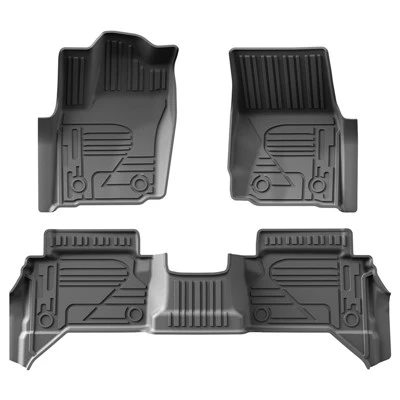
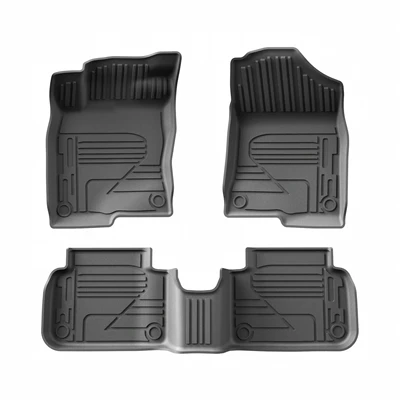
Car floor mats are primarily categorized by material and coverage style; TPE, coiled-loop, and leather are currently the most common types on the market. When choosing, consider whether you prioritize eco-friendliness, dirt resistance, or a premium look and feel.
Popular Car Floor Mat Materials
TPE floor mats are currently the most sought-after option: Made from thermoplastic elastomer, they are non-toxic, odorless, and fully recyclable. They are completely waterproof-simply rinse to clean-and resist warping under both high and low temperatures. While they come at a slightly higher price point, they offer the best environmental performance, making them the top choice for families with children and expectant mothers.
Coiled-fiber mats are a widely popular everyday pick: Their mesh-like surface traps sand and debris effectively, delivering a comfortable foot feel and strong anti-slip performance. They can be cleaned easily with a water spray, though dirt and grime may build up in gaps over time, requiring regular cleaning. Low-cost versions may emit a strong adhesive odor.
Leather-style mats have a premium appearance: They wipe clean effortlessly with a damp cloth, but become slippery when wet. Inferior products may give off pungent fumes after sun exposure and are prone to scratching and scuffing.
PVC and rubber mats are budget-friendly, yet tend to harden and shift in cold weather. Rubber mats may also warp or bulge with drastic temperature changes, creating a potential hazard of interfering with pedal operation.
Full Coverage vs. Partial Coverage: Which Is Safer?
Partial coverage mats are currently the most recommended: They wrap around the edges while leaving space under the front seats, so they never interfere with seat rails or airbag deployment. Custom-fit TPE mats paired with factory-style clips provide excellent, secure alignment.
Full coverage mats offer the most comprehensive protection: They wrap up the side sills to keep mud and water from spilling out, but installation is more involved and may require removing seats. If the side walls are too high, they could obstruct side airbag deployment-always verify material thickness and clip reliability before purchasing.
Flat mats are the safest option but offer poor stain resistance: Mud and water easily seep through to the original carpet in wet or snowy conditions, so they are typically only used as original-equipment accessories.
How to Choose Wisely and Avoid Common Pitfalls
Prioritize custom-fit mats with locking clips: Universal-fit mats are prone to shifting, and can slide under the accelerator pedal during sudden braking-creating a serious safety risk. Reputable brands use 3D laser scanning to map vehicle floors and produce precision-molded mats.
Always check for odors: Quality products will have almost no smell straight out of the packaging, or only a very faint natural material scent. Return any item with persistent strong adhesive or plastic odors immediately; never use inferior products that release harmful fumes when exposed to heat or sunlight.
Ask for official test reports: Request RoHS certification and formaldehyde emission test results from the seller. Products with a measured formaldehyde level of ≤0.02 mg/m³ are far stricter than standard requirements-only choose materials that remain odorless and dimensionally stable after prolonged sun exposure.