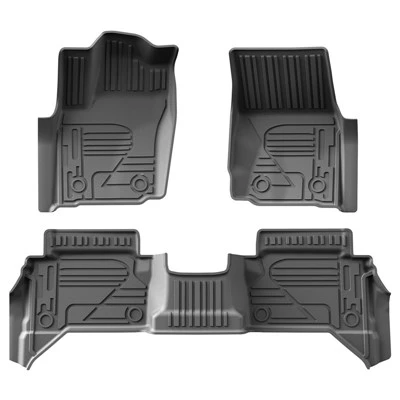
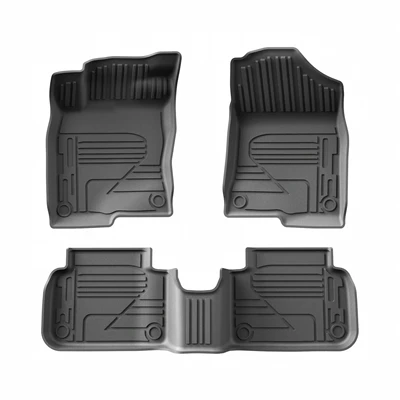
With the continuous growth of the automotive market, consumers are demanding higher standards for car floor mats in terms of quality, safety, and environmental performance. As an advanced automotive accessory made from eco-friendly materials, TPE car floor mats have attracted increasing attention due to their excellent durability, stability, and comfort. Producing high-quality TPE car floor mats requires multiple stages, including material preparation, mold development, molding, surface treatment, and quality inspection. Advanced manufacturing technologies ensure that the final products meet modern vehicle protection requirements.
The first stage of TPE car floor mat production is raw material preparation. TPE materials combine thermoplastic polymers with elastomer components, offering both the easy processing characteristics of plastics and the flexibility of rubber. During production, manufacturers carefully adjust the material formulation according to performance requirements and add appropriate functional additives to improve wear resistance, waterproof performance, aging resistance, and environmental safety. Only materials that pass strict selection and testing can proceed to the next production stage.
Mold design is a critical part of TPE car floor mat manufacturing. Since different vehicle models have unique interior floor structures, manufacturers typically use 3D scanning and digital modeling technologies to collect accurate vehicle data and develop dedicated molds. High-precision molds ensure that the floor mats match vehicle dimensions accurately, providing better stability after installation and reducing issues such as movement or edge lifting.
During the molding stage, TPE car floor mats are commonly produced through injection molding or compression molding processes. Heated TPE materials are placed into molds and shaped under controlled temperature and pressure conditions to create the required product structure. Automated manufacturing equipment improves molding accuracy and production efficiency while ensuring consistent quality between different production batches.
After basic molding is completed, the products undergo surface treatment and detailed processing. Manufacturers optimize edges, textures, anti-slip structures, and drainage designs to improve practical performance. For example, three-dimensional surface patterns enhance slip resistance, multi-layer structures improve cushioning performance, and raised edges provide better protection against liquids and contaminants.
Quality inspection is an essential part of the TPE car floor mat production process. Manufacturers typically conduct dimensional inspections, wear resistance tests, waterproof tests, temperature resistance tests, and environmental safety evaluations to ensure stable performance under different conditions. Strict quality management systems further improve product reliability and service life.
Industry experts believe that future TPE car floor mat manufacturing will continue to develop toward intelligent production, automation, and sustainable manufacturing. With ongoing advances in material science and digital production technologies, TPE car floor mats will achieve further improvements in environmental protection, safety, comfort, and customization, providing consumers with higher-quality automotive interior protection solutions.