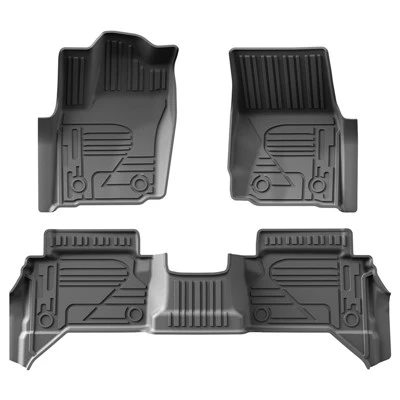
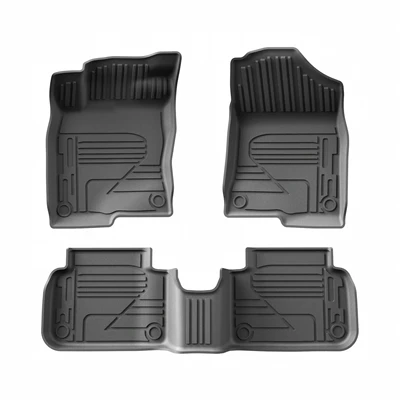
With the continuous development of the automotive accessories market, consumer demand for interior protection products has shifted from basic functions toward higher quality and multi-functional solutions. As an environmentally friendly and high-performance material, TPE (Thermoplastic Elastomer) has been widely used in automotive floor mats, trunk liners, and other vehicle protection products due to its excellent flexibility, durability, and safety features. Today, various types of TPE car mats are available on the market, offering solutions for different vehicles and user requirements.
TPE full-coverage floor mats are among the most popular types of TPE automotive products. Featuring three-dimensional molded designs, these mats are precisely shaped according to vehicle floor structures and can cover the driver area, passenger area, and rear seating space. They effectively prevent dust, mud, and liquids from entering the vehicle interior. With strong waterproof and stain-resistant performance, TPE full-coverage mats are suitable for daily commuting as well as more demanding environments.
In addition to full-coverage designs, TPE flat floor mats are also commonly found in the market. Compared with full-coverage versions, flat mats feature a simpler structure, easier installation, and convenient replacement. These products are typically manufactured using integrated molding processes, providing good wear resistance and easy maintenance. They are suitable for everyday use in family vehicles.
As consumers become more aware of the importance of protecting vehicle storage areas, TPE trunk liners have also gained increasing attention. These products are designed to protect the trunk floor from stains, scratches, and damage caused by luggage, tools, outdoor equipment, and other items. TPE trunk liners often feature raised edges that help prevent liquid overflow and provide stronger protection.
With the rapid growth of the new energy vehicle market, some manufacturers have developed specialized TPE car mats designed specifically for electric vehicles. These products are created based on the unique structures of new energy vehicles, while focusing on environmental standards, lightweight construction, low odor performance, and precise fitting to provide better interior protection solutions.
From a material design perspective, some TPE car mats also use composite structures by adding anti-slip layers, cushioning layers, and reinforced surface layers. These designs improve comfort, durability, and overall performance. Such products not only provide basic protection but also enhance the overall vehicle interior experience.
Industry experts believe that the future TPE car mat market will continue to develop toward greater specialization, customization, and environmental sustainability. With ongoing improvements in manufacturing technology, more TPE products designed for different vehicle models and usage scenarios will become available, providing consumers with safer, more comfortable, and higher-quality automotive experiences.