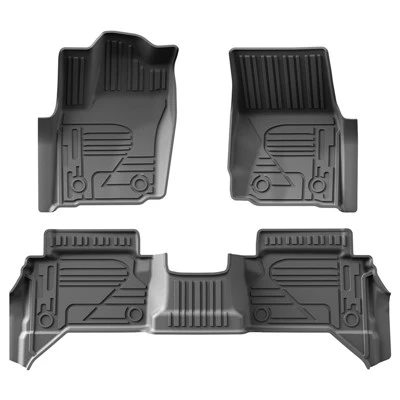
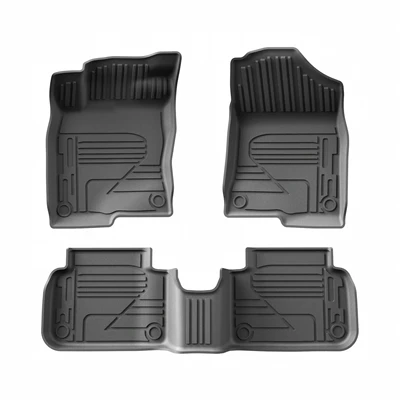
With the continuous development of the automotive accessories market, consumers are demanding higher standards for car floor mats in terms of quality, functionality, and user experience. The creation of a high-quality car floor mat requires multiple stages, including product design, material preparation, manufacturing, and quality inspection. Modern production processes focus not only on appearance but also on safety, durability, and environmental performance to meet the diverse needs of vehicle owners.
The first stage of car floor mat production is product design and data collection. Since different vehicle models have unique interior structures, manufacturers usually use 3D scanning, precise measurements, and digital modeling technologies to collect accurate floor dimensions. Designers then develop molds and production plans based on this data, ensuring that the final products fit specific vehicle models with better coverage, stability, and anti-slip performance.
After the design phase, manufacturers begin preparing materials. Common materials used for car floor mats include leather, PVC, rubber, TPE, coil materials, and composite materials. Production companies select suitable materials based on product positioning and conduct quality inspections to ensure excellent wear resistance, water protection, environmental safety, and service life. For eco-friendly floor mats, special attention is given to odor control and the reduction of harmful substance emissions.
During the manufacturing process, different types of floor mats require different production techniques. Leather floor mats usually go through cutting, bonding, stitching, and surface treatment processes to achieve a refined appearance and strong durability. Rubber and TPE mats are often produced through injection molding or compression molding, where high temperatures are used to create stable structures. Coil mats require coil processing, base-layer fixing, and composite treatment to improve dust collection and cleaning convenience.
After manufacturing, car floor mats undergo detailed processing and quality inspections. Workers check edges, connection points, anti-slip structures, and dimensional accuracy to ensure that products do not have issues such as deformation, cracking, or poor fitting. Some premium products also undergo wear resistance tests, waterproof tests, and environmental safety inspections to improve overall reliability.
With the advancement of smart manufacturing technologies, car floor mat production is becoming more automated and precise. Digital equipment improves production efficiency while ensuring more consistent product quality. Meanwhile, customized manufacturing technologies allow consumers to choose personalized solutions based on vehicle models, interior colors, and functional requirements.
Industry experts believe that future car floor mat manufacturing will place greater emphasis on sustainable materials, innovative technologies, and intelligent production methods. By continuously improving manufacturing processes and technological capabilities, the car floor mat industry will provide consumers with safer, more comfortable, and higher-quality interior solutions.