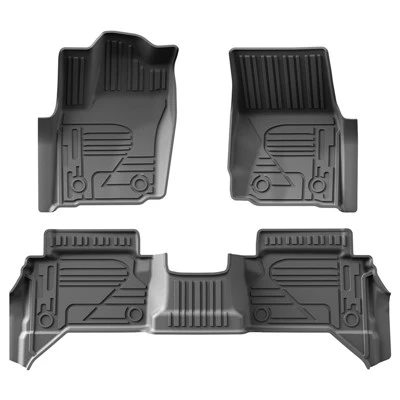
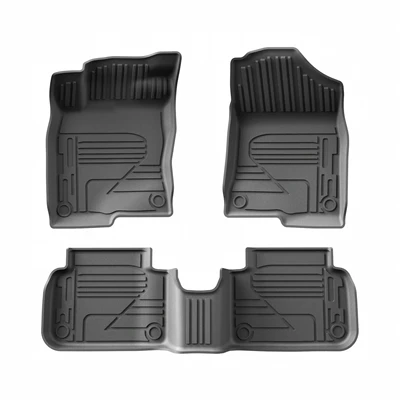
As an essential part of automotive interiors, car floor mats have developed from basic decorative items into functional components that bring together protection, safety and comfort. Their structural design directly affects how well they perform in everyday use, with carefully engineered products effectively shielding the original vehicle interior while removing potential safety risks.
A dependable mat is built around accurate fit and anti‑slip construction. High‑quality options are custom‑formed using 3D scans of specific vehicle models, so they follow every contour of the vehicle floor perfectly. Fasteners, anti‑slip spikes or locking clips are fitted at key points to stop movement, ensuring the mat will never shift to block pedals or obstruct seat rails.
For protection, high‑sided three‑dimensional or recessed layouts are commonly used. Raised edges hold water, mud and debris securely, preventing spills from seeping into floor cavities and leading to corrosion or mold. Multi‑layer constructions use materials such as thermoplastic elastomer, composite coiled fiber and sound‑absorbing padding: the surface layer repels dirt and feels comfortable underfoot, the middle layer dampens road noise and vibration, and the base layer stays firmly anchored.
Different structural styles cater to different requirements: partial‑coverage mats cover exposed areas while keeping space clear for airbags and seat mechanisms; full‑coverage designs extend over door thresholds for complete containment, provided dimensions and fastening systems are carefully engineered. Well‑made mats also balance ease of cleaning with long‑term durability, resisting warping in extreme temperatures and maintaining consistent performance throughout extended use.