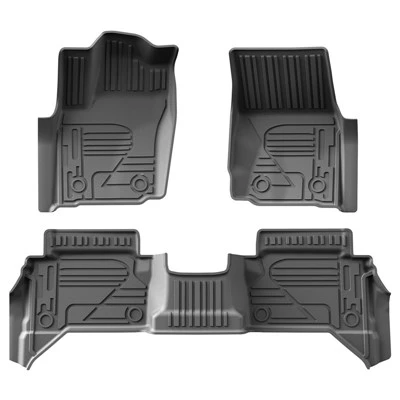
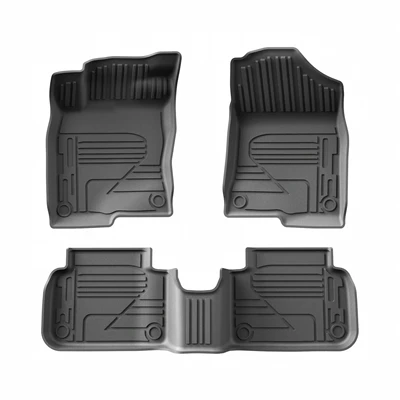
With the continuous development of the automotive market, consumers are placing higher demands on the functionality, durability, and environmental performance of vehicle interior accessories. As an important product for protecting vehicle interiors, all-weather car floor mats have become increasingly popular due to their water resistance, dirt resistance, durability, and easy maintenance. Behind these advantages, advanced manufacturing processes play a crucial role in ensuring product quality.
The production of all-weather car floor mats begins with careful material selection. Manufacturers choose raw materials with excellent weather resistance, environmental safety, and structural stability, such as polymer composite materials and thermoplastic elastomers. These materials can withstand high temperatures, low temperatures, and humid conditions while maintaining flexibility and durability during long-term use.
Mold design is a critical stage that directly affects the quality of the final product. By using digital scanning and 3D modeling technologies, manufacturers can accurately capture vehicle interior dimensions and create customized molds for different models. Precise mold manufacturing ensures that the edges, fastening areas, and overall shape of the floor mat fit perfectly inside the vehicle, improving both stability and appearance after installation.
The forming process is another essential part of all-weather car floor mat production. Common manufacturing methods include injection molding, thermoforming, and vacuum forming. During these processes, heat treatment allows the material to develop a stable structure. Strict control of temperature, pressure, and processing time is required to ensure uniform thickness, clear surface patterns, and strong resistance to deformation.
After forming, the floor mats undergo additional procedures such as trimming, surface treatment, and quality inspection. Manufacturers carefully refine the edges, remove excess material, and test key performance factors including slip resistance, waterproof capability, dimensional accuracy, and wear resistance. Some premium products also include antibacterial treatments and environmental safety testing to provide a healthier vehicle interior environment.
With the advancement of smart manufacturing technologies, the production of all-weather car floor mats is becoming increasingly automated and precise. The use of advanced equipment improves production efficiency while enhancing product consistency and reliability. In the future, continued innovation in eco-friendly materials and manufacturing technologies will further improve performance, sustainable production, and customized designs, providing consumers with safer, more comfortable, and longer-lasting protection for vehicle interiors.