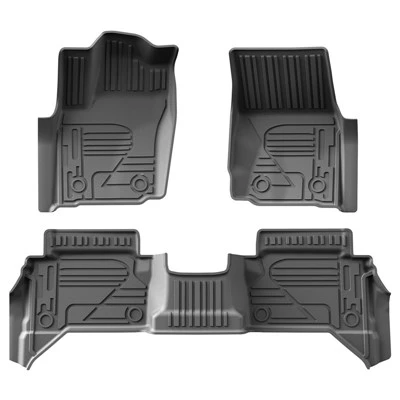
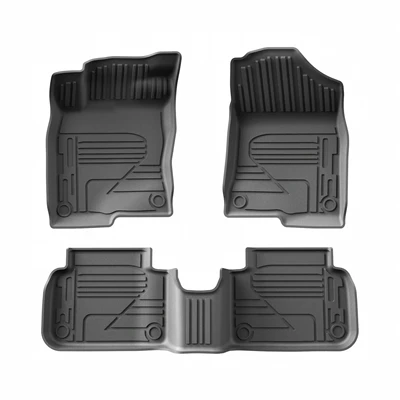
With the continuous evolution of automotive consumption trends, consumers are placing higher expectations on vehicle protection accessories. As one of the most frequently used storage areas in a vehicle, the trunk often carries luggage, shopping items, sports equipment, and outdoor gear, creating higher requirements for trunk liner performance. In recent years, TPE (Thermoplastic Elastomer) trunk liners have become an important choice for automotive protection products due to their well-designed structures and excellent material properties.
The structural design of TPE trunk liners focuses first on precise fitting performance. Since different vehicle models have unique trunk dimensions, contours, and layouts, modern TPE trunk liners are often developed using three-dimensional scanning and digital modeling technologies. Through high-precision mold manufacturing, the products can closely match the trunk floor structure, reduce installation gaps, improve stability, and maximize available storage space.
In terms of overall construction, TPE trunk liners usually feature an integrated molding design. Compared with traditional assembled products, one-piece structures reduce connection gaps and improve sealing performance and structural integrity. When liquids, mud, or debris enter the trunk area, the integrated design helps prevent contamination from spreading and provides better protection for the original vehicle floor.
A multi-layer composite structure is one of the key characteristics of TPE trunk liners. Many high-quality products consist of a wear-resistant surface layer, a cushioning support layer, and an anti-slip bottom layer. The surface layer uses special textures to improve wear resistance and stain protection, allowing it to withstand friction caused by daily cargo handling. The middle cushioning layer enhances flexibility and impact resistance, while the anti-slip bottom layer increases friction through special patterns to reduce movement during vehicle operation.
Raised-edge design is another important feature that distinguishes TPE trunk liners from standard products. By increasing the height around the edges, the liner creates a protective barrier that helps contain liquids, wet items, and outdoor equipment. This structure reduces the risk of spills spreading throughout the trunk area while making cleaning and maintenance more convenient.
TPE trunk liners also focus on detailed structural optimization. For example, specially designed drainage channels help distribute liquids quickly and prevent water accumulation. Anti-slip surface patterns improve cargo stability and reduce item movement during driving. Curved edge designs enhance overall appearance and create better integration with the vehicle interior.
Environmental design concepts are also becoming an important part of modern TPE trunk liner development. Products made from environmentally friendly TPE materials typically feature low odor and low volatile emissions, meeting the growing demand for healthier vehicle interiors while maintaining strong protective performance.
Industry experts believe that future TPE trunk liner structures will continue to develop toward lightweight, modular, and intelligent designs. With ongoing innovations in materials and manufacturing technologies, TPE trunk liners will further improve in protection, installation convenience, and environmental value, providing consumers with safer, more practical, and higher-quality vehicle storage protection solutions.