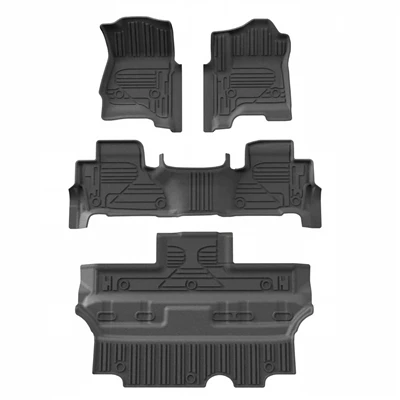
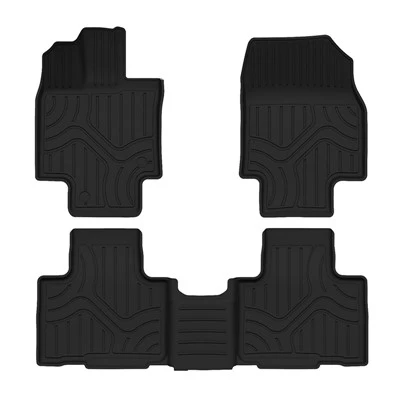
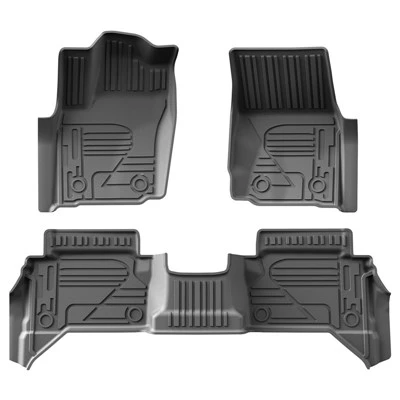
When buyers compare OEM vs ODM car floor mats, they usually want to know which option will help them launch the right product with a manageable development budget. However, knowing what the abbreviations mean does not tell them whether an existing mold can be used, who must prepare the design, or how the finished mats will be checked.
My work at Kangyu covers mold design, 3D scanning and modeling, product development, and material and process selection. When reviewing a project, I first need to understand what the buyer already has: a finished design, a reference sample, or only a target vehicle and a product idea.
That starting point helps define the development work. In this guide, I explain the basic difference between OEM and ODM, then show how I would assess the practical questions behind a bulk order.
Here, OEM and ODM describe manufacturing cooperation. They do not imply that a product is authorized by a vehicle brand or sold as its genuine accessory.
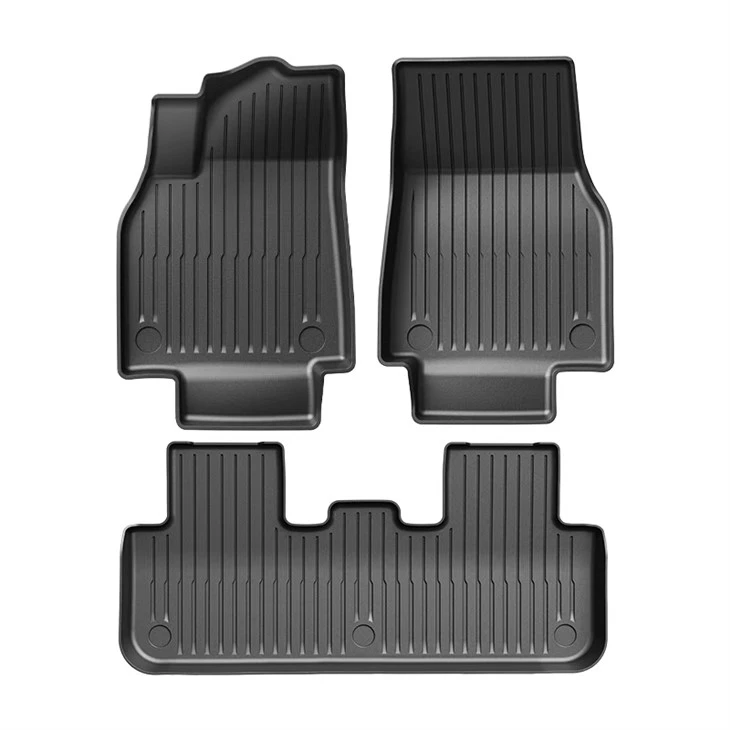
Kangyu TPE Tesla Model Y Floor Liners
OEM vs ODM Car Floor Mats: Who Leads the Design?
OEM stands for Original Equipment Manufacturer. In a typical contract manufacturing project, the buyer provides the product design or detailed specifications, and the factory manufactures to those requirements.
ODM stands for Original Design Manufacturer. The manufacturer provides or develops the design as well as producing the product. The buyer selects an available solution or works with the factory to develop one around an agreed brief.
| Decision point | Typical OEM arrangement | Typical ODM arrangement |
|---|---|---|
| Design direction | Led by the buyer | Provided or developed by the manufacturer |
| Starting information | Drawings, specifications, or a defined product design | Target vehicles, functional requirements, or a selected factory design |
| Factory involvement | Manufacturing review, tooling, production, and agreed validation | Design development plus tooling, production, and agreed validation |
| Buyer's main task | Provide clear requirements and approve compliance with them | Define the market need and approve the proposed solution |
| Important agreement | Design interpretation and responsibility for changes | Development scope, design approval, and usage rights |
Suppliers sometimes use these terms differently. I recommend confirming the actual work rather than relying on the quotation heading.
For example, a buyer may supply the appearance design but ask our team to develop the vehicle-fitting geometry. That project combines responsibilities. Recording who develops, checks, and approves each part is more useful than debating its label.
Where Does Private Label Fit In?
Private label means selling a product under your own brand. It describes the branding arrangement; it does not fully describe who designed the product.
A distributor might select an existing vehicle-specific mat and request its own logo and packaging. Another buyer might commission a new design and also sell it under a private label.
The engineering work can be very different.
A packaging change may leave the mat unchanged. A molded logo may require a tooling modification. A new outline, retention point, or raised edge may require a more substantial review. Retention points are the locations where the mat connects to the vehicle's fixing system.
Before treating all of these requests as "customization," I would separate them into branding changes and product changes. That makes the development scope easier to quote and approve.
Can You Use an Existing Vehicle Mold?
A mold is the tool that gives the material its formed shape. Whether suitable tooling already exists is an important question in both OEM and ODM projects.
Existing Product With Branding Changes
If our existing product matches the required vehicle and its specification meets the buyer's needs, development can focus on the requested changes.
However, matching the brand name alone is insufficient. We need to confirm the model, model year, relevant version, driving position, and set contents.
Left-hand-drive and right-hand-drive vehicles should not be assumed to use interchangeable driver's mats. Similarly, front and rear mats, cargo liners, and seat-back protectors should be identified separately in the order.
Existing Design With Product Changes
A buyer may like the current fit but want a different pattern, edge shape, or material specification.
Those requests need an engineering review. A change that looks small in a photograph may affect forming, trimming, or how the mat sits in the vehicle.
At Kangyu, our core process is male-mold vacuum forming: a heated TPE sheet is drawn over a shaped tool using vacuum. We also use female-mold vacuum forming and injection molding. The selected process affects how a design is transferred into tooling and a finished part.
New Vehicle or New Product Geometry
If suitable tooling is unavailable, development may include vehicle scanning, modeling, mold manufacture, samples, and trial installation.
This can occur in either cooperation model. An OEM buyer's completed drawings do not automatically mean a usable mold exists. An ODM project can also require substantial new development.
For that reason, I would not promise that ODM is always faster or that OEM always costs more. The answer depends on the starting point and the required changes.
Inside Kangyu's Car Floor Mat Mold Workshop
Mold making is one stage of our floor mat development process at Kangyu. In my work, I consider vehicle geometry, material shrinkage, and the selected forming process when developing the mold design. Once the mold is ready, we produce samples and check their fit in the actual vehicle before approving mass production.
Why Design Approval Still Needs Vehicle Fit Checks
A digital model is an important development tool, but I do not treat it as the final proof of fit.
Scan Data Needs Comparison
One difficult issue I have encountered is inaccurate scan data. We have also found differences between vehicles of the same model produced at different times.
In our practical work, we scan and compare vehicles from different production batches where available, then use those comparisons to establish a representative design reference.
That does not mean averaging incompatible vehicle versions together. If the differences affect compatibility, they need to be investigated and the product application defined accordingly.
For a buyer, the practical lesson is to provide clear vehicle information and discuss access to a reference vehicle early.
Material and Forming Affect Dimensions
TPE, or thermoplastic elastomer, is a flexible material that can be shaped through heating and processing.
The design must consider material shrinkage as the part cools, together with the clearances needed for installation. Clearance means space between adjoining surfaces. Local interference means surfaces press against each other rather than leaving a gap.
Depending on the area, we may adjust the design to account for these effects. This is not a rule that every mat should simply be made larger. The adjustment must be checked on the formed sample in the vehicle.
Trial Installation Checks the Finished Product
Our development process includes repeated trial installation. We check whether the mat sits properly, whether its fixing points match, and whether it affects pedal operation.
A buyer's visual approval of a pattern cannot replace these checks.
Whether the design originated with the customer or our team, the project should identify who performs vehicle validation and how the result is approved before mass production.
Which Route Fits Your Project?
You Want to Launch a Brand Using Existing Products
Start by checking available vehicle applications and product specifications.
If the products already meet your needs, branding and packaging customization may be a practical starting point. You do not necessarily need a new product design to sell under your own brand.
Prepare a vehicle list, quantity per model, preferred product specification, and branding requirements. Keep the first brief clear enough to distinguish essential changes from optional ones.
You Already Have Drawings or a Defined Design
An OEM arrangement may suit your project, but allow time for a manufacturing review.
Our team needs to understand dimensions, materials, surface requirements, fixing details, and any features that must remain unchanged. If the proposed process requires adjustments, those changes should be reviewed before tooling begins.
Also confirm whether the supplied design has already been validated in the vehicle or still needs physical testing.
You Have a Market Requirement but Need Design Support
An ODM arrangement may be appropriate when you know the vehicle applications and desired product features but need the factory to develop the design.
Your brief should explain the intended result: coverage, appearance, material preferences, branding, and target market.
Agree on approval stages. A pattern rendering, a formed sample, and a vehicle-tested sample answer different questions. Completing one stage should not automatically approve the others.
Our 【OEM/ODM custom design services】 page explains the customization scope available at Kangyu.
Control Costs by Defining Changes Early
The unit price is only one part of a development decision. Buyers should also consider tooling, samples, revisions, packaging, and the work required to launch each vehicle application.
For a multi-model order, record the quantity for each model. A total order of 100 sets spread across ten applications has a different development scope from 100 sets for one application, particularly if some molds do not exist.
To make quotations easier to compare, ask suppliers to separate:
- Existing products from applications requiring new development.
- Branding changes from changes to the mat itself.
- Tooling charges from production prices.
- Sample preparation from vehicle validation.
- Required features from optional appearance changes.
Confirming material, geometry, and branding before tooling can also reduce avoidable revisions. If a requirement changes after approval, ask which parts of the design, tooling, and validation need to be reviewed again.

Kangyu TPE Car Mats In-House Precision Mold Making
What I Recommend Before Requesting a Quote
My first definition of quality is that the mat fits its intended vehicle. Material characteristics, stability in use, ease of cleaning, and clear, attractive patterns also matter. None of these is guaranteed by choosing the OEM or ODM label alone.
Before requesting a quotation, prepare:
- Your target market and sales channel.
- Vehicle models, years, relevant versions, and driving positions.
- Required pieces in each set.
- Available drawings, samples, or reference photographs.
- Material, pattern, color, logo, and packaging requirements.
- Initial quantity per vehicle model and intended launch date.
Then ask the manufacturer to identify what already exists, what requires development, and what must be validated.
At Kangyu, we use this information to review the project scope before moving into design and production. Send your vehicle list and available design information through our email so our team can assess the appropriate starting point.
Frequently Asked Questions
Does OEM Manufacturing Automatically Give Me Ownership of the Mold?
No. Mold ownership, storage, maintenance, access, and transfer arrangements should be stated in the agreement. Paying a tooling charge or receiving free tooling does not, by itself, explain all of those rights.
Can an ODM Design Be Exclusive to My Brand?
Exclusivity must be negotiated. Define whether it applies to the design, a particular vehicle application, a territory, or a sales channel, and for how long. Do not assume that adding your logo creates exclusive product rights.
Can I Change the Material or Manufacturing Process on a Repeat Order?
Request a technical review first. A material or process change can affect dimensions, appearance, and product behavior. The manufacturer should identify whether new samples, tooling adjustments, or renewed vehicle checks are needed before approval.
What If I Find a Fit Problem After Approving the Sample?
Provide the vehicle details, product identification, photographs, and a clear description of the problem. These help the team investigate whether it relates to application selection, installation, production, or design. Agree on the corrective action and any required revalidation before further production.