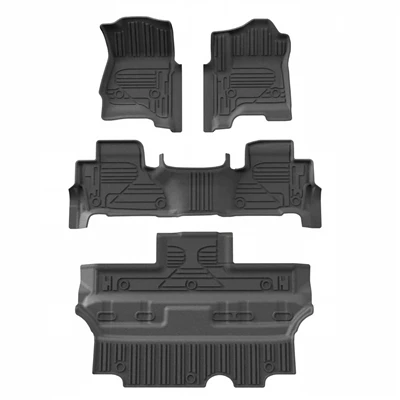
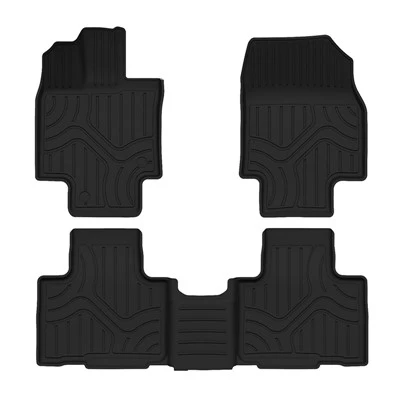
I'm Freya, an overseas sales and order coordinator at Kangyu. Every day I answer around 30 inquiries from importers, distributors and e-commerce sellers. The most common first message is a single line: "Do you have floor mats for [car model]?" It sounds simple, but a model name alone rarely tells us which floor we are supposed to fit. Is it the five-seat or the seven-seat version? Left-hand or right-hand drive? Which production years? Each answer can change the shape of the mat.
When these details are missing, we go back and forth for days before we can even quote. Worse, an order sometimes goes ahead on an assumption, and the buyer receives mats for the wrong variant. Ordering a model-specific product that turns out not to match the vehicle, followed by an exchange, is the most common complaint we handle.
So when buyers ask me how to prepare vehicle data for custom floor mat development, my answer is usually less technical than they expect. You do not need to scan cars yourself. You need to describe the exact vehicle clearly enough that our engineers know which floor to match. This guide is the checklist I send to new buyers.
What "Vehicle Data" Really Means in Custom Floor Mat Development
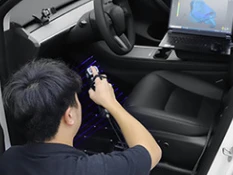
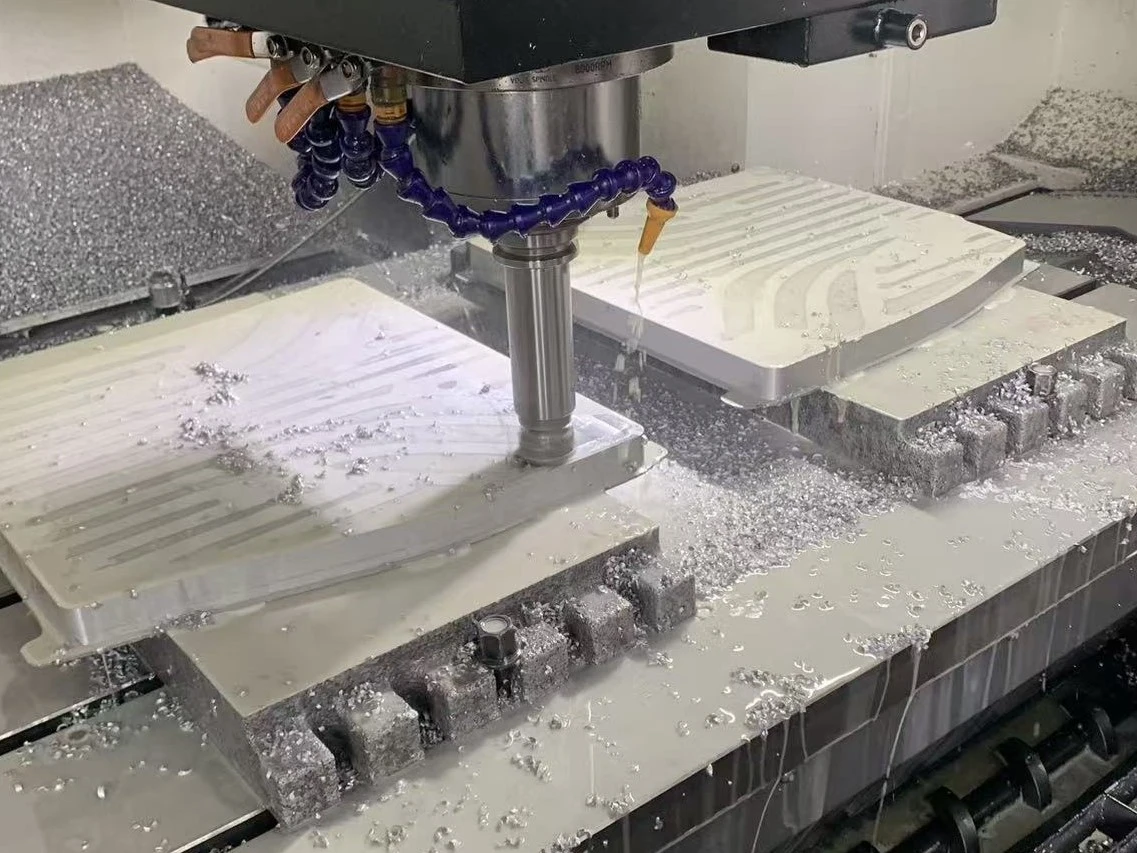
Many buyers imagine that custom floor mat development begins with the buyer sending a 3D file. In practice, the technical data work happens on the factory side. At Kangyu, a new model goes through five steps: 3D scanning of the original vehicle, data collection and processing, mold development, sampling, and trial fitting on a real car.
What the buyer provides is identification: exactly which vehicle, which configuration, and how the mats will be used. Think of ordering a spare part. The more precisely you describe the part's application, the less likely you are to get the wrong one.
Our mold engineer once told me the hardest part of the whole job is the original vehicle scan, because getting scan data from a real car is not always easy. That is why a clear description from the buyer, and sometimes access to a real vehicle, saves so much time.
Step 1: Work Out Which of the Three Situations You Are In
Before you collect anything, decide which situation applies. It determines how much you need to prepare, and how long the project will take.
Situation A: The Model Is Already in Our Mold Library
We keep 800+ molds covering domestic and international mainstream models. For these, custom floor mat development is mostly a matter of confirming the variant and your product choices (process, color, logo, packaging). Samples from an existing mold usually take 3-7 days. We also keep stock of all Tesla and Toyota models, at least 20 sets per model, and ready-stock items ship in 3-5 days. Standard custom orders take 7-10 days. If your list is mainly mainstream models, this is where you will most likely land.
A customer from Jordan, whom we met at an exhibition, works this way. In January she ordered about 50 models across nearly 10 brands, including Audi, BMW, Kia and Volkswagen. In June she came back for close to 100 models, including Chery, BYD and Toyota. Her method is simple: she sends me real photos of the cars she wants to cover and asks whether we can make them. I check against our library and confirm. There is no technical preparation on her side, only clear information.
Situation B: The Model Is Not in Our Library, but You Can Describe It and Show It
Here a new mold has to be made, and the process takes about 40 days from order confirmation to finished mold. One of our cross-border e-commerce customers selling in the US and Europe placed an order for a model we had no mold for, and we completed the mold and delivered in 40 days. For this situation, the more you can share, such as the exact vehicle information, photos of the footwell and floor, and an existing mat if there is one, the faster we can start. If you can help us reach a real vehicle for scanning, even better.
Situation C: A New, Rare or Right-Hand-Drive Model
This is also a mold project, but it needs the most careful data. Right-hand-drive models are a good example: the pedal and footwell layout is different, so the mat cannot be a simple mirror of the left-hand-drive version. Tell us the target market early, so we can plan the scan and the trial fitting around it. We are also preparing to develop right-hand-drive mats for Southeast Asian markets such as Thailand, so inquiries in this area are welcome.
If you are unsure which situation applies, send me your model list and I will tell you which items are in the library and which need a new mold. For wholesale orders of 100 pieces, mold development is free of charge, and our minimum order is 10 pieces for any product, so it is easy to start with a mixed list. Please confirm the details in your quote.
Step 2: The Vehicle Variant Checklist
This is the part that prevents wrong-model orders. When I receive an inquiry, these are the eight things I need to know. If you collect them before you write to a supplier, your quote will usually arrive faster.
- Make, model and generation. "Model Y" is not enough if there are standard, refreshed and long-wheelbase versions. Say which one.
- Production years. Give a range, and if the car had a facelift, tell us which side of it your customers drive. A mid-cycle update can change the floor.
- Body style. Sedan, hatchback, SUV, wagon or pickup. The same model name can exist in more than one body.
- Seat layout. Five or seven seats, bench or separate seats in the second row, and whether a third row exists. Tell us which rows need mats.
- Mat positions needed. Front row, rear row, trunk, front trunk, seat-back mats. Many buyers forget to specify positions and get a partial set.
- Trim and powertrain. Petrol, diesel, hybrid or electric, and the trim level. Do not assume it makes no difference. Give us the information and we check it against our data.
- Left-hand or right-hand drive, and target market. These affect the driver's side mat and sometimes the clip layout.
- Photos. The driver's footwell, the floor with the original mat removed, and the floor-mat clips or anchor points. A few phone photos often settle questions that three emails would not.
Beyond fitment, it also helps to mention what you want the mat to be: single-layer or double-layer, the surface texture, color, logo and packaging. Our core vacuum-forming male-mold process suits large-volume orders, the female-mold process helps control cost, and injection molding or the male mold are better for higher-end models. If you tell me your price range and target customers, I can suggest the right process. You can read more about this in our guide to 【TPE car floor mats and our molding processes】.
Why the Same Model Can Still Be Different
Buyers sometimes ask, "It is the same car, so why do you need the production year?" I asked our mold engineer the same question. His answer: even for the same brand and model, cars produced at different times can differ slightly. So our team does not rely on a single scan. They scan vehicles from different production batches and take a middle value.
There are two more engineering points that buyers rarely see. First, a mat has to allow for the real clearance and interference between the mat and the vehicle floor, which show up as positive and negative values in the data. Second, the material shrinks after molding, so the mat is made slightly larger than the raw measurement. Even then, the data is never the final word. Real-vehicle trial fitting is, which is why our quality engineer insists on repeated trial fitting on actual cars.
The practical lesson for you: the more specific your production-year information, the less your mats depend on a "best guess" at the data.
Check Before Mass Production: Sample and Trial Fit
Our standard OEM/ODM flow does not skip this. After the design and mold, we make one to three sample pieces so you can confirm the effect and check for defects. Then we trial-fit them on a vehicle, our technician confirms the clip specification, and you confirm that the mat does not interfere with pedal operation and that the clips match. Only then do we go to mass production. The sample price is the same as the finished product price, and it is fully refunded after you place the order. Your files are then archived under confidentiality control. For more on how we handle custom projects, see 【OEM/ODM custom floor mat services】.

Kangyu TPE Car Mats In-House Precision Mold Making
Summary: Five Actions Before You Send Your Inquiry
- Sort your model list into "mainstream" and "special" and check it against our 【vehicle model coverage】.
- For every model, complete the eight-point variant checklist above, especially production years, seat layout and drive side.
- Collect three photos per model that is not mainstream: the footwell, the bare floor and the clip points.
- Decide your product choices (layers, texture, color, logo, packaging) and your expected quantity per model.
- Send everything in one message to our team through the 【contact page】 so we can tell you quickly whether you are in Situation A, B or C.
A complete first message saves days. In my experience, the buyers who prepare this way are also the ones who place repeat orders, because they receive the right mats the first time.
Frequently Asked Questions
Do I Need to Provide a VIN for Custom Floor Mat Development?
Not necessarily. A VIN can help in some cases, but for most orders the make, model, production years, body style, seat layout and drive side are enough. Photos of the footwell make confirmation faster.
How Long Does It Take if My Model Is Not in Your Mold Library?
A new mold takes about 40 days from order confirmation to finished mold. For models in our library, samples usually take 3-7 days, ready-stock items ship in 3-5 days, and standard custom orders take 7-10 days.
Can the Same Floor Mat Fit Different Years of One Model?
Not always. Production batches and facelifts can change the floor. That is why we ask for the production year range and, for new molds, scan vehicles from different batches. Always confirm with your supplier rather than assuming.
What Is the Minimum Order, and Are There Fees for Samples and Molds?
Our minimum order is 10 pieces for any product. The sample price equals the finished product price and is refunded in full after you order. Mold development is free for wholesale orders of 100 pieces. Please confirm the terms for your project in a quote.